

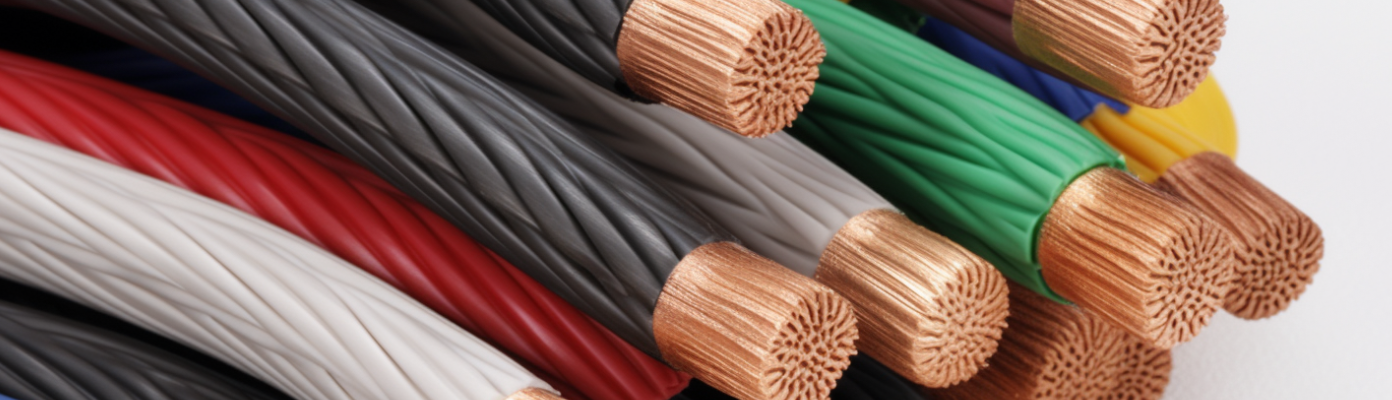
Wires and Cables
Stabilizers play a crucial role in the wire and cable industry, where they are used to enhance the performance and durability of insulation and jacketing materials. Here are some key applications of stabilizers in the wire and cable industry:
- Heat Stabilizers:Wire and cable insulation materials, such as PVC (Polyvinyl Chloride), can be exposed to elevated temperatures during both manufacturing and service life. Heat stabilizers are added to these materials to prevent thermal degradation and maintain their mechanical properties, flexibility, and electrical insulation performance at high temperatures.
- UV Stabilizers:Cables and wires used outdoors or in applications exposed to sunlight are susceptible to UV degradation. UV stabilizers are incorporated into the insulation or jacketing materials to protect against UV radiation, preventing color fading, embrittlement, and deterioration of mechanical and electrical properties.
- Antioxidants:Antioxidants are added to wire and cable materials to prevent oxidative degradation caused by exposure to oxygen, heat, and other environmental factors. They help maintain the insulation's resistance to oxidation, preventing degradation of electrical properties and extending the lifespan of the cables and wires.
- Flame Retardants:The wire and cable industry often requires flame-resistant materials to meet safety standards and regulations. Flame retardant additives act as stabilizers by providing fire resistance to cables and wires. They help minimize flame spread and reduce smoke and toxic gas emissions during a fire event.
- Lubricants:Lubricants are used during wire and cable extrusion processes to reduce friction between the material and the processing equipment. They assist in achieving smooth extrusion, improving surface finish, and preventing defects like melt fracture. Lubricants also aid in the uniform distribution of other additives and improve the overall processability of the materials.
- Processing Aids:Stabilizers in the form of processing aids are used to enhance the processability of wire and cable materials during manufacturing. They improve melt flow, reduce processing temperatures, assist in the dispersion of fillers and other additives, and help achieve uniformity in the insulation or jacketing layers.
- Antistatic Agents:Antistatic agents may be added to wire and cable materials to prevent the buildup of static electricity, which can attract dust, affect handling, and create safety hazards. Antistatic stabilizers improve the surface conductivity of the insulation or jacketing materials, minimizing static charge accumulation.
The specific choice and combination of stabilizers depend on factors such as the type of wire or cable, insulation and jacketing materials, intended applications, environmental conditions, and regulatory requirements. Different stabilizer combinations are employed to achieve the desired stability, electrical performance, flame resistance, and overall reliability of wires and cables.